Key Insights
- An electric truck’s battery pack adds roughly 1,200 to 1,500 kg of dead weight compared with a diesel equivalent, and India’s axle-load limits do not rise to compensate.
- Because payload is revenue, every kilogram of battery weight is earning capacity removed from every single trip.
- Trailers built with high-strength steel (BSK 46, HSS 800) and fully automated submerged-arc welding achieve the same structural strength at 15 to 20 percent lighter weight, recovering 500 to 700 kg of lost payload.
- On a vehicle that costs roughly twice as much up front, longevity matters more, not less. Satrac bodies are engineered for 15+ years of service life and command approximately 20 percent higher resale value.
- The body builder, not just the truck manufacturer, determines whether an electric fleet investment pays back.
When an electric truck costs twice as much, everything changes
Three years ago, if a fleet owner asked whether to go electric, the answer was straightforward: not yet. The price gap was too wide, charging infrastructure too patchy, and there was no used market to speak of.
Today the equation has shifted. In July 2025 the Government of India introduced its first incentive scheme for electric trucks under PM E-DRIVE, offering demand incentives of up to ₹9.6 lakh per vehicle for N2 and N3 category trucks, with an initial target of more than 5,600 e-trucks. Battery costs have fallen. Early adopters have produced real operating data.
But an electric truck still costs roughly twice what its diesel equivalent does. That premium demands justification, and the justification does not come from the truck alone. It comes from what you pair it with.
The hidden cost that decides everything: payload
Here is what most fleet owners miss when they first model an electric truck.
Electric trucks are heavy. A battery pack capable of moving a fully loaded vehicle over a working range adds roughly 1,200 to 1,500 kg of dead weight compared with a diesel truck in the same class. India’s axle-load limits do not budge for electrification. Every kilogram of battery is a kilogram taken directly out of your earning capacity.
For a fleet owner, payload is revenue. A truck that carries less per trip earns less per trip, and on thin logistics margins that gap decides whether the vehicle makes commercial sense at all.
This is where the trailer manufacturer stops being a supplier and becomes the deciding factor in the investment.
Where the weight comes off
The single most effective way to protect payload on an electric truck is to take weight out of the body and trailer without taking out strength. Get that trade-off wrong and you either lose earning capacity or, worse, build a lighter body that fails early under load.
A conventional steel truck body built for diesel duty can weigh anywhere from 3,500 to 4,200 kg depending on design and material grade. A body engineered using high-strength steel, formed beams and fully automated submerged-arc welding achieves equivalent structural integrity at 15 to 20 percent lighter weight, a saving of roughly 500 to 700 kg.
Satrac builds exactly this discipline. Our trailers and truck bodies use BSK 46 and HSS 800 high-strength steel with a yield strength of 450, nearly double the 250 that competitors offer, combined with 500 mm formed beams in a ladder-frame chassis. The result is a superior strength-to-weight ratio: the structural performance a heavy hauler needs, achieved with less material.
You can see how we engineer that across the full range.
On a diesel truck, that ratio is a useful advantage. On an electric truck, it is the difference between an asset that pays for itself and one that does not, because it recovers through the body the payload that the battery takes away.
Why durability matters more on an electric platform
There is a second layer that fleets running their first electric vehicles tend to discover late.
Battery packs are expensive. Regenerative braking systems are sensitive to vibration and load spikes. Electronic braking systems expect clean integration with the vehicle’s weight distribution. A trailer body that flexes excessively, cracks, or corrodes introduces vibration that accelerates wear across every electrical system on the vehicle.
Electric trucks also redistribute weight. A battery pack mounted low and central changes where load sits over the axles, and a body designed to a diesel weight profile will not balance the same vehicle correctly. Poor load distribution accelerates tyre wear, strains suspension and undermines braking, which is the opposite of what a high-value electric asset can afford.
Satrac engineers load distribution as a core design step rather than an afterthought, matching imposed loads, axle positioning and structural layout to how the vehicle will actually run. As electronic braking and connected trailer systems become standard on electric platforms, a body built to integrate cleanly with that architecture protects both the driver and the drivetrain over the long haul.
That engineering discipline comes from 25 years of building bodies for mining and construction environments, where the operating conditions are harsher than anything an electric distribution truck will face.
The resale calculation
A larger capital outlay makes the total cost of ownership case more sensitive, not less, to how long the asset lasts and how well it holds value. A body that cracks, corrodes or needs early replacement destroys the economics of an already expensive vehicle.
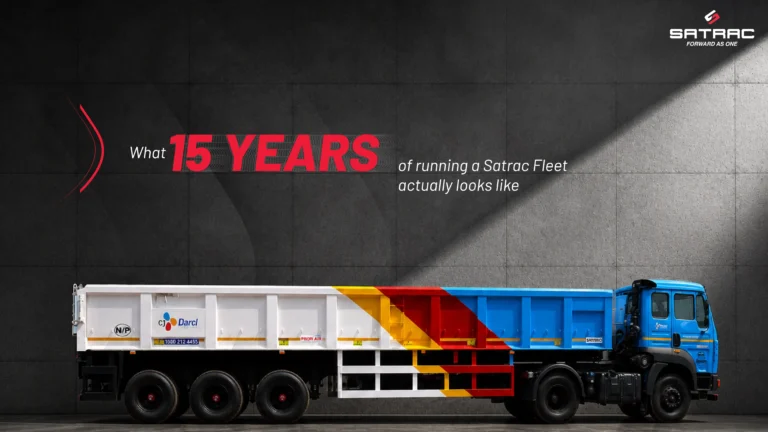
A Satrac-built body is engineered for 15 or more years of operational life and commands approximately 20 percent higher resale value than comparable builds. Fleet owners running our trailers from 2008 are still operating them today.
You can read what 15 years of running a Satrac fleet actually looks like and why our trailers last longer.
On an electric vehicle, where the buyer is betting on a long earning horizon to justify the premium, that durability is not a bonus feature. It is the foundation the entire business case rests on.
Behind it sits a pan-India service network with genuine spare parts, AMC programmes and quick response teams, so an expensive asset spends its time earning rather than waiting.
Forward as One, into the electric decade
Satrac does not build the truck. We build the part of it that decides how much it carries, how well it balances, and how long it lasts. On an electric platform, those three things determine everything.
In the diesel era, a trailer manufacturer’s job was to carry the load, run a long time, and hold resale value. Those things still matter. In the electric era, one more thing matters above all: maximise payload on a weight-constrained platform.
As BharatBenz, Tata, Ashok Leyland and Volvo bring electric heavy vehicles to Indian roads, the body builder that can lightweight intelligently, balance precisely and endure genuinely becomes the fleet owner’s most valuable partner. A premium truck paired with a body that cannot recover the battery weight is a bet that loses. A premium truck paired with the right body is a partnership that works.
That is what Forward as One has always meant. The truck and the trailer move together, or they do not move at all. The powertrain is changing. The partnership is not.
Talk to a Satrac specialist
If you are evaluating an electric fleet, we will walk you through the numbers specific to your route profile, payload requirements and operating model, and show you exactly where the weight can come off without compromising the life of the vehicle.
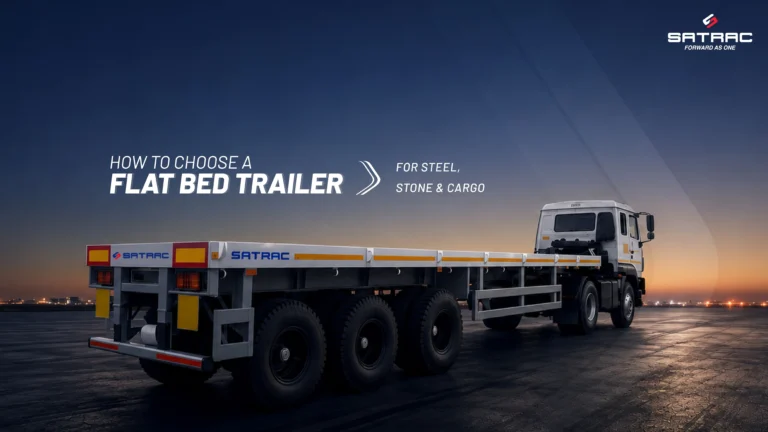
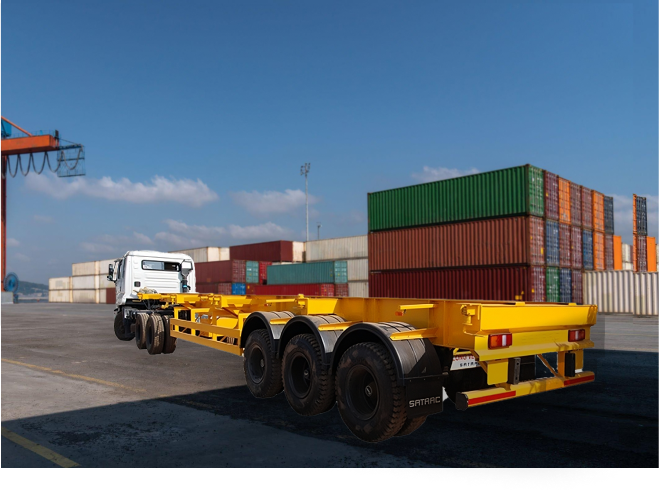
Contact a Satrac specialist to discuss your requirement, or explore our range of flat bed trailers and skeletal trailers.
Frequently Asked Questions
How much payload does an electric truck lose to its battery? A battery pack sized for commercial duty typically adds 1,200 to 1,500 kg of dead weight compared with a diesel truck in the same class. Because India’s axle-load limits do not change for electric vehicles, that weight comes directly out of available payload.
Can a lightweight trailer recover the payload lost to battery weight? Partly, and often enough to change the business case. A body built from high-strength steel with optimised beam design can be 15 to 20 percent lighter than a conventional build, recovering roughly 500 to 700 kg of the payload the battery consumes.
Are lightweight trailers less durable than standard trailers? Not when the weight reduction comes from steel grade and design rather than from using less material. High-strength steel with a yield strength of 450 plus delivers the structural performance of a heavier conventional build, which is why Satrac bodies are engineered for 15 or more years of service.
Do electric trucks need a different trailer than diesel trucks? The trailer type is the same, but the specification should differ. Electric trucks carry weight differently because of where the battery sits, so load distribution and axle positioning need to be matched to the electric weight profile rather than a diesel one.
What resale value does a well-built trailer hold after 10 years? A Satrac-built body typically commands around 20 percent more in the secondary market than comparable builds, because buyers of used trailers can see the difference in chassis geometry, weld quality and corrosion resistance.