Why some trailers last 15 years and others don’t
Walk into a fleet operation and ask a fleet owner why they keep buying Satrac trailers. Rarely will they mention price first. They’ll tell you about the vehicle from 2008 that’s still running, or the trailer that never broke down mid-haul. They’ll talk about payload efficiency, resale value, and predictable operating costs.
This loyalty isn’t accidental. It starts in the manufacturing facility where engineering precision, material choice, and process discipline transform steel and welding torches into trailers and tippers built to endure.
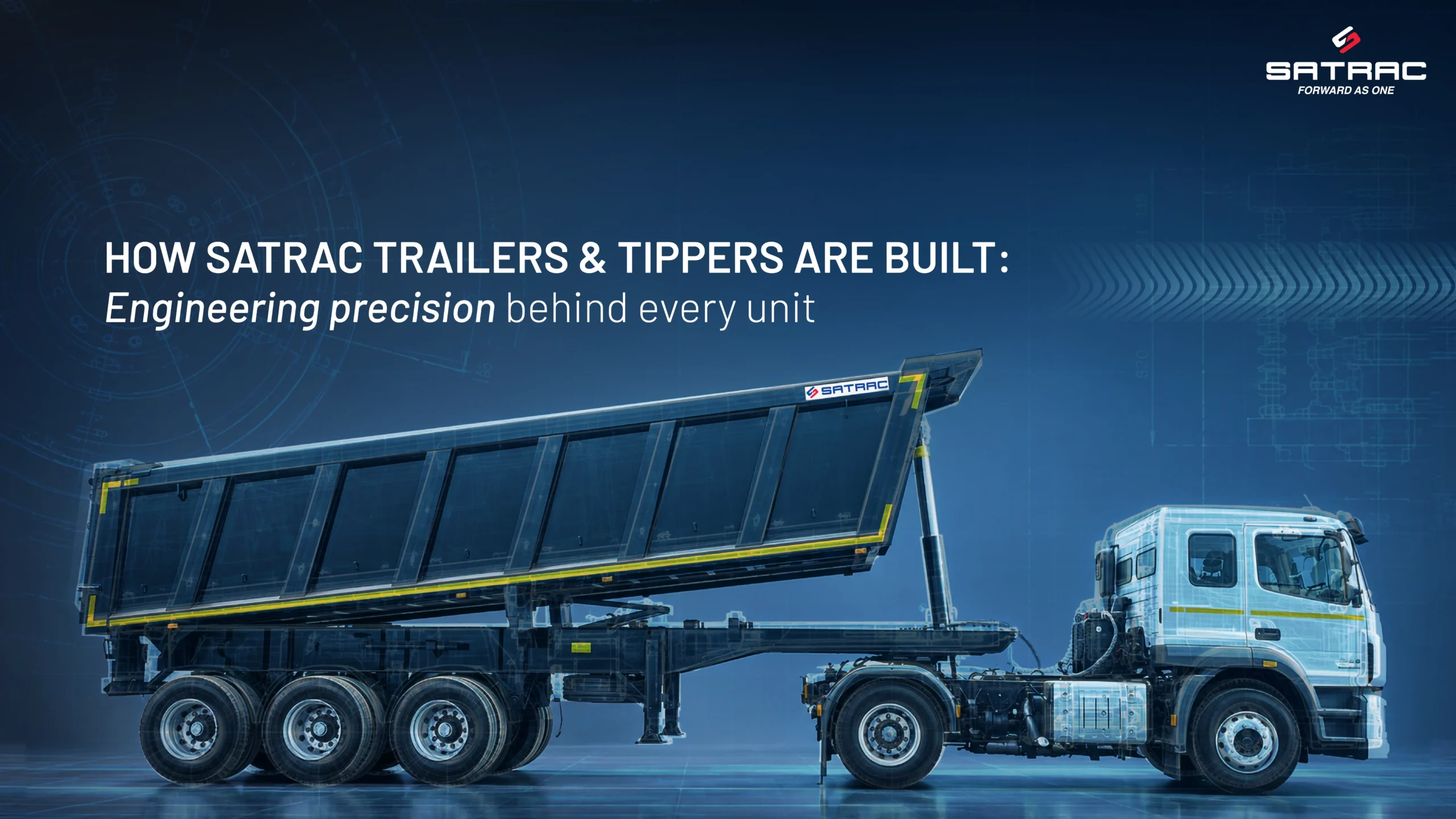
Here’s how Satrac builds trailers and tippers that fleet owners depend on for 15+ years of operational life.
Design & Development: Starting with simulation, not guesswork
Every trailer Satrac manufactures begins not on the factory floor, but in the design lab.
The process starts with Understanding the requirement and application through detailed load-case analysis and finite-element simulation. Engineers model the stress distribution across the frame, the impact of different payload configurations, and the behaviour of the structure under dynamic highway conditions. All this before a single beam is cut.
This simulation-led approach eliminates the guesswork. A poorly designed frame might carry the same payload in static conditions but fail under highway vibration or eccentric loads. Satrac’s simulation process catches these failures in the digital space in the organisation’s office, not after the customer had deployed his fleet on an important assignment.
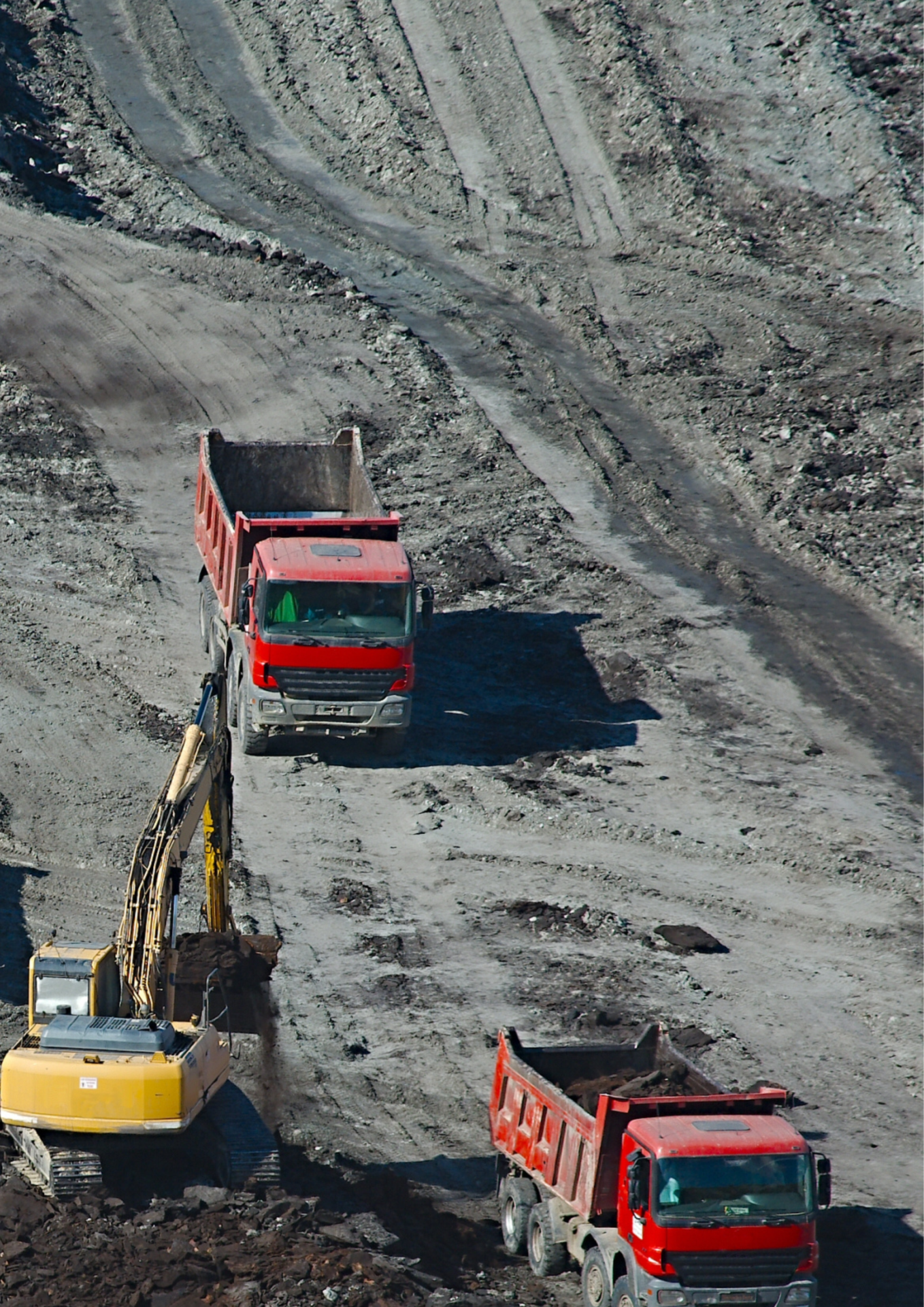
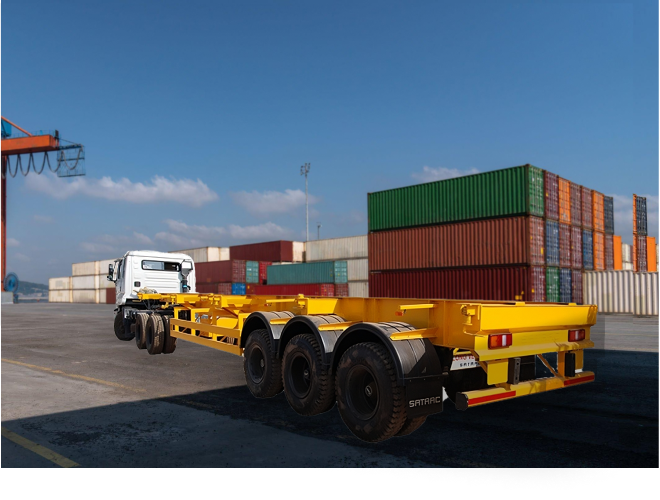
Application-specific engineering is the discipline here. A mining tipper operates under brutal conditions, high-impact loads, abrasive cargo and constant shock. A port skeletal trailer operates under different constraints – container locking systems, overall stability and precise axle alignment. The design adapts to the application. One size doesn’t fit all because one operational profile doesn’t fit all.
Materials: BSK 46 & Hardox- Steel that outperforms
Once the design is validated, material selection decides whether the trailer will perform or deteriorate.
Satrac uses BSK 46 high-strength steel and HSS 800 for primary structural components. Here’s why: these materials yield strength at 450 MPa compared to standard structural steel at 250 MPa. This means the same load-carrying capacity with 15–20% less material weight – directly translating to better payload capacity and lower fuel consumption.
For tippers exposed to abrasive cargo (rock, aggregates, coal), Satrac specifies Hardox steel, engineered for impact and wear resistance. This material choice is why a Satrac tipper running mining duty for 10 years still has structural integrity, while cheaper alternatives are being scrapped.
The material choice isn’t about cutting costs. It’s about precision. Every material is selected for how it will perform under the trailer’s actual operating profile, not just theoretical limits.
Formed Beams & Precision Fabrication
The backbone of every Satrac trailer is the 500mm formed beam – a 12mm top flange, 8mm web, 16mm bottom flange custom-fabricated in-house.
This isn’t a standard off-the-shelf beam. It’s purpose-built for trailer duty, delivering maximum payload capacity with minimal weight and superior torsional stability. The beam dimensions are customizable based on the trailer type and payload requirements. For instance a rock-body tipper needs a different beam geometry than a skeletal container trailer.
The formed beam is fabricated using precision machinery: fully automated submerged-arc (SAW) welding, shearing machines, and specialised jigs ensure every beam meets exact dimensional tolerances. Inconsistency is the enemy of long-life trailers. Each beam must be identical to the one before and the one after.
Automated SAW Welding: Consistency at Scale
Once beams are fabricated, they’re welded to the chassis using fully automated submerged-arc (SAW) welding. This is where precision meets repeatability.
Automated SAW welding eliminates human variables. No hand-tremor, no inconsistent heat input, no “good weld days” and “bad weld days.” Every joint receives the same thermal profile, the same penetration depth, the same structural integrity. The result: uniform, high-quality welds that won’t crack under highway stress or mining-duty punishment.
Robotic manipulators perform full 360-degree rotation of components, enabling welding at any angle. This ensures that complex joints – the weak points where most structural failures originate – are welded with precision.
Jigs, Fixtures & Standardisation
Every joint must align. Jigs and fixtures ensure dimensional accuracy and alignment in every trailer rolling off the line. Kingpin positioning is precise to millimetre tolerances. Zero-to-zero alignment between chassis and axle is the standard, not the exception. This precision means the trailer handles reliably for 15 years, not just the first two.
Standardised processes reduce human error. The process for fabricating one skeletal trailer is identical to the 500th. The result: repeatability. No surprises. No quality drift.
Grit Blasting (add points that we have in sales pitch)
Finishing: Paint, Inspection
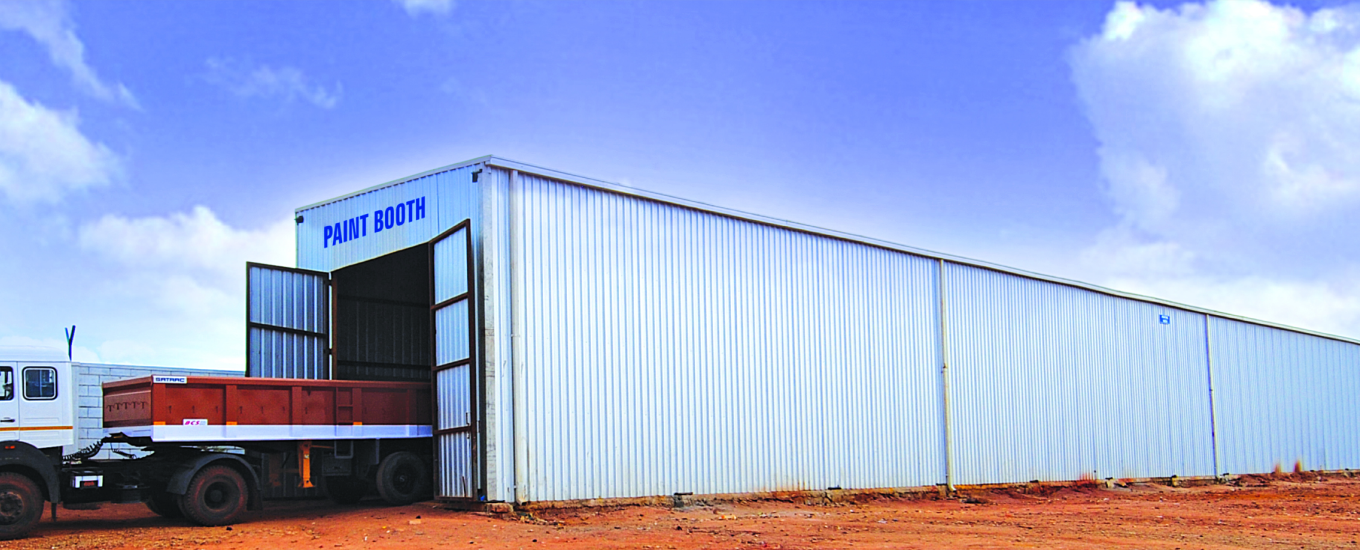
After fabrication, trailers move through grit-blasting to remove mill scale, ensuring superior paint adhesion and corrosion resistance. A 15-metre drying oven cures primer and topcoat uniformly, preventing the peeling and weather failure that shortens other trailers’ lives.
Quality checks happen at every stage, powered by Factory AI systems that flag dimensional deviations, weld quality issues, and paint defects. IATF 16949 and ISO 9001 certifications validate the process discipline.
Telematics (add bit more content)
Modern trailers from Satrac also integrate telematics capabilities – sensors that track axle load, brake performance, and structural strain over time. Fleet owners get real-time data on their trailers’ health, enabling predictive maintenance before failures occur.
Why This Matters to You
This precision in manufacturing translates directly to your fleet’s bottom line: better payload efficiency, lower downtime, superior resale value, and 15+ years of reliable operation.
When a fleet owner says they’re still running a Satrac trailer from 2008 without calling for service, they’re not exaggerating. They’re experiencing the result of engineering excellence built into the manufacturing process.
Talk to a Satrac specialist to understand how precision manufacturing translates into fleet profitability and operational uptime.