For twenty-five years, the conversation around a heavy commercial vehicle started with the engine. Diesel torque, mileage, gradeability etc. The prime mover set the terms, and the body followed. That conversation is now seeing some changes. India’s freight corridors are, slowly but unmistakably, turning towards electric and the shift asks a sharper question of every trailer manufacturer in India than the diesel era ever did.
The electric truck is no longer a concept
In July 2025, the Government of India rolled out its first-ever incentive scheme for electric trucks under PM E-DRIVE, offering demand incentives of up to ₹9.6 lakh per vehicle for N2 (3.5–12 tonne) and N3 (12–55 tonne) category trucks. The initial outlay targets more than 5,600 e-trucks, and a far larger follow-on programme, reportedly worth close to a billion dollars is already being planned. Truck electrification in India is still small, projected at roughly 2% of the segment, but the direction of travel is set.
The OEMs have moved in step. Tata’s Ultra electric trucks are running last-mile and regional freight in several cities. For certain fleet owners, the electric question has stopped being if and started being when.
Why the truck body carries the burden in an EV
Here is the part most of the industry hasn’t fully reckoned with: electrification is not just an engine problem. It is a body and trailer problem.
A battery pack large enough to move a loaded heavy vehicle is heavy, often adding a tonne or more of dead weight compared with a diesel counterpart. Because India’s axle-load limits don’t rise just because the truck is electric, every kilogram of battery is a kilogram stolen from payload. For a fleet owner, payload is revenue. A truck that can carry less per trip earns less per trip, and on thin logistics margins that gap decides whether an EV makes commercial sense at all.
This is where the commercial vehicle body builder in India quietly becomes the most important partner in the transition. The single most effective way to protect payload on an electric truck is to take weight out of the body and trailer, without taking out strength. Get that trade-off wrong and you either lose earning capacity or, worse, build a lighter body that fails early under load.
Lightweight, without going light on strength
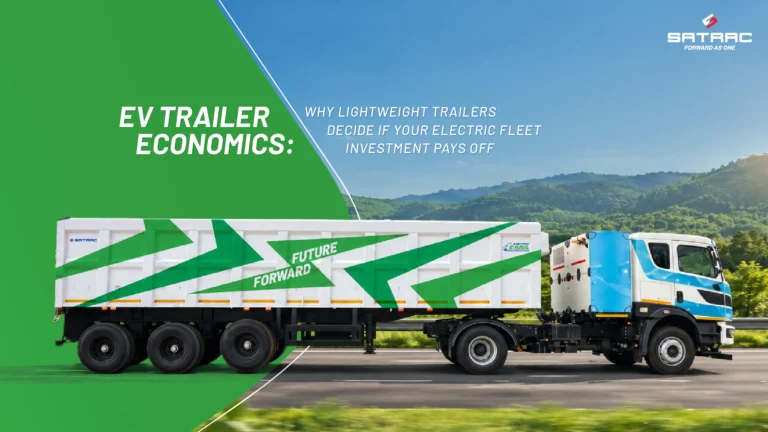
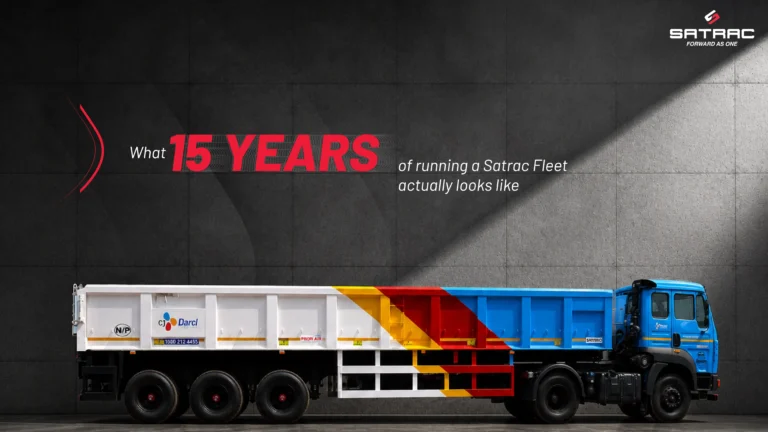
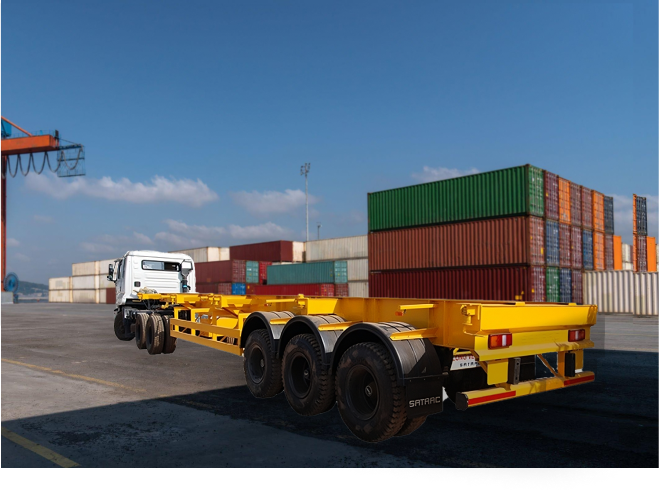
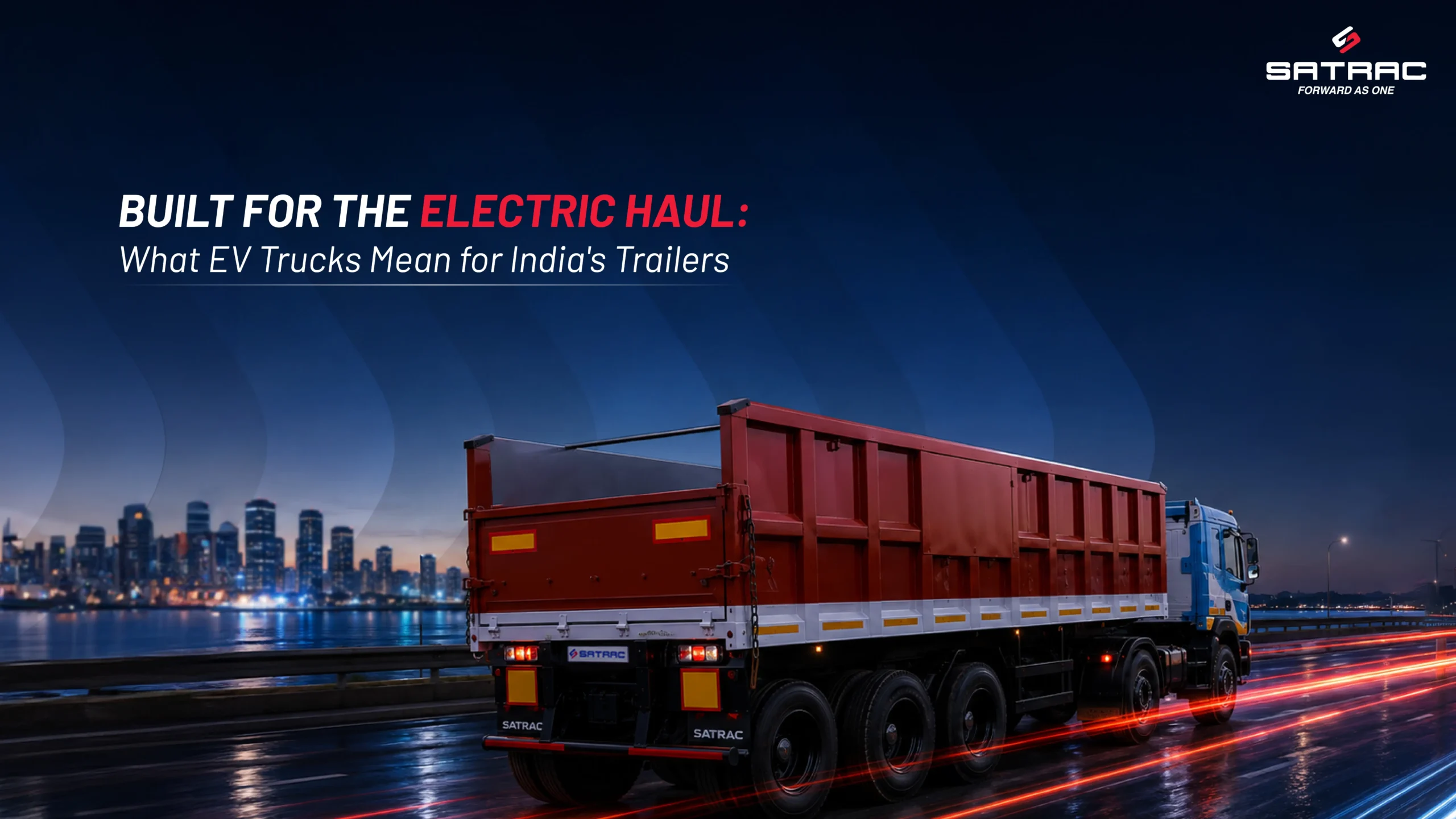
This is precisely the engineering discipline Satrac has built its reputation on. Our trailers and truck bodies are constructed from high-strength steel, formed beams, and fully automated submerged-arc (SAW) welding a combination that delivers a superior strength-to-weight ratio. In plain terms, we achieve the structural integrity a heavy hauler needs using less material, which means a lighter body that still runs for 15 years and more.
For an electric fleet, that ratio is no longer a nice-to-have. It is the difference between an EV that pays for itself and one that doesn’t. The same longevity engineering that has always underpinned “Long Life Matlab Satrac” turns out to be exactly what the electric era demands, because it recovers, through the body, the payload that the battery takes away.
Weight balance becomes a precision game
Electric trucks also redistribute weight. Poor load distribution accelerates tyre wear, strains the suspension, and undermines braking, the opposite of what a high-value electric asset can afford.
Satrac engineers load distribution as a core design step, not an afterthought, matching imposed loads, axle positioning, and structural layout to how the vehicle will actually run and what it will actually carry. As electronic braking (EBS) and regenerative systems become standard on e-trucks, a body and trailer built to integrate cleanly with that electronics architecture rather than fight it, thus protecting both the driver and the drivetrain over the long haul.
Longevity matters more, when the capital outlay is large
An electric truck costs significantly more up front than its diesel equivalent. That larger capital outlay makes the total-cost-of-ownership case even more sensitive to how long the asset lasts and how well it holds value. A body that cracks, corrodes, or needs early replacement destroys the economics of an already expensive vehicle.
A Satrac-built body already commands roughly a 20% higher resale value than comparable builds, and it is engineered for 15-plus years of operational life. On an EV, where the buyer is betting on a long earning horizon to justify the premium, that durability isn’t a bonus feature, it is the foundation the entire business case rests on.
Forward as One – into the electric decade
Satrac doesn’t build the truck. But we build the part of it that decides how much it carries, how well it balances, and how long it lasts and on an electric platform, those three things determine everything. As BharatBenz, Tata, Ashok Leyland, and Volvo bring electric heavy vehicles to Indian roads, the body-builder that can lightweight intelligently, balance precisely, and endure genuinely becomes the OEM’s and the fleet owner’s most valuable ally.
That is what Forward as One has always meant: the truck and the trailer move together. The powertrain is changing. The partnership isn’t. Whatever powers the next generation of Indian freight, it will still need a body worth the wait and built to last.
Talk to a Satrac specialist about how our lightweight, high-strength trailers and truck bodies are being engineered for India’s next generation of commercial vehicles.